Monday, 11 November 2013

Abhimanyu – The lone warrior


His association with the Mahabharata war started when he was still in his mother’s womb. I have heard this story many times from my childhood and always wondered if this could be true. Recently, a study has revealed that babies start learning to recognise words while still in their mother’s womb. The joy at having got the proof has prompted me to narrate the story of Abhimanyu.

Abhimanyu was the son of Arjuna and Subhadra and the nephew of Lord Krishna.
Arjuna, in the presence of the mighty Lord narrated the various battle formations and how to conquer them, while Abhimanyu was still in his mother’s womb. Unfortunately, just after Arjuna narrated the strategy of entering the Chakravyuh, Subhadra fell asleep. Not wanting to disturb her sleep, Lord Krishna and Arjuna left the place.

Later, Abhimanyu grew up learning warfare techniques from Pradhyumna, Lord Krishna’s son. Being the son of a great warrior, Arjuna, young Abhimanyu was eager to learn more and Lord Krishna, realising the boy’s potential, appointed two more gurus for young Abhimanyu. Two great warriors Kritavarma and Satyaki, who served Lord Krishna, taught young Abhimanyu many more skills, but none realised that Abhimanyu’s knowledge of Chakravyuh was not complete!

In the Mahabharata war, Abhimanyu fought very bravely. His charm and valour made even his enemies respect and adore him at the same time. He displayed tremendous skills at dvandva yudha or a one-to-one combat. Finally, he shattered the Chakravyuh formation and entered it with the four Pandava brothers following him closely. But Jayadhrada, the King of Sindh, cut the four Pandava brothers quickly, as they did not know the strategy. The strategy of entering the chakravyuh was known only to Arjuna, Krishna and Pradyumna. The three of them, though, had been cleverly drawn to the opposite end of the battle field by Samsaptaka’s army led by Susarma. 

Knowing that he was trapped alone in this formation, and that his father and uncle were not around to help him, Abhimanyu was determined to fight fairly and win the war for his side. Single handed, he succeeded in almost destroying a formation called as the Akshauhini that was made up of several chariots, elephants, cavalry and infantry.Even when he was surrounded by great warriors like Karna, Dronacharya, his son Ashwathama, his grand uncle Shakuni, he remained calm and brave and fought them with honour and dignity. 


Duryodhana understood that it would be impossible to challenge this young man in dvandva yudha and ordered all his warriors to attack him simultaneously. Young Abhimanyu argued with his uncle and the others. Duryodhana was not in a mood to listen. He mocked the young lad by asking him how he was planning to escape when the Chakravyuh had been closed. 

Abhimanyu, the brave heart that he was, calmly replied that escape routes are for cowards and he had stepped into the battle field to fight and not to escape. When an army of great warriors attacked him ruthlessly, he fought them without breaking the rules that governed battles then. He left Duryodhana injured and chariot less. Abhimanyu then killed Lakshmana, Duryodhana’s son. Duryodhana was not only angered by this, he was also jealous of Abhimanyu as Dronacharya and Kripacharya, who was Dronacharya’s brother-in-law, were in awe of Abhimanyu’s bravery. 

Every single warfare rule was broken by Duryodhana and he killed a lone soldier with the help of seven great warriors. Duryodhana, by doubting the abilities of the other warriors made them fight more bitterly with Abhimanyu. Karna made the young lad weapon less while Kripacharya killed his horses and charioteer.Yet Abhimanyu fought on, shielding himself with the wheel of the broken chariot and using this as a weapon, attacked the enemies. Once the wheel also was broken, Abhimanyu picked up a mace and battled on with Dushasana, who finally killed him.  


Once Abhimanyu was killed Duryodhana, his brother Dushasana and the rest of the army danced joyously around the lifeless body of the fallen hero.This single episode became the turning point in the entire Mahabharata war. Lord Krishna and Arjuna were angered beyond words and paid every single act of Duryodhana in his own coin.

The only consolation to this unfair, gory killing of Abhimanyu came from Vrishasena, Karna’s son. After the battle Parikshit and Vrishasena were the two contenders to the throne of Hastinapur. Vrishasena was the eldest son of the eldest Pandava, but gave up his right to the throne and made Parikshit, son of Abhimanyu, the King !

What happened in this epic war after Abhimanyu's killing provides useful insight into the ways of the world. The Pandavas were kind at heart and good in deed. Arjuna did not want to fight his cousins as he respected and honoured relationships more than power. In fact, he was good to a fault. Lord Krishna, one may feel, was helpful and happy to a fault. But when they were irked by the constant abuse of power by Duryodhana and his dishonest ways, they became unstoppable. 


Sunday, 10 November 2013

How so strange!


So strange are the ways of the world,
who knows or who cares about growing old?
But as age catches up we look around-
and the world seems so lost and found!

So strange are the ways of men,
they know not when they hurt others so often.
But scream they would at the slightest hurt to them-
and wish to be treated as the rarest gem!

So strange are the ways of our life;
who knows when it begins and when it ends!
Though it begins with a cry and ends thus,
let the meantime be spent without much of fuss!

So strange are the ways of nature, that
makes everything you see afar, feel rich and green
But when you bend down to see your shadow;
Your own form will seem like your foe! 


So strange are the ways of the maker-
He is the law maker and hence the law breaker!
Kind, most of the times, cruel sometimes.
But fair to all creatures at all times!

Saturday, 9 November 2013

The power of appreciation!


Appreciation is a very powerful tool and works well in motivating people. The action itself brings positive energy as the person who appreciates genuinely has to be in an ego-less state while doing this. In this state, only two people exist, the appreciated who receives an instant positive energy from the one who appreciates, who possess the positive energy.
So what prevents us from appreciating the good work of others is the ego that plays spoil sport!
Let me narrate two incidents where I was at the receiving end of this positive energy.
I was returning home from the nearby super market one day.  I walked past my daughter and her friends who were playing badminton and they greeted me with big smiles.
One of the girls told me that sometime in the past I had taught her how to play badminton and from then on she picked up interest in the game. I could not recall the incident. But I was very happy. I told them it felt nice to receive appreciation from young people. After I returned home I pondered over the episode.

What a powerful tool appreciation is! It can mend broken relationships; it can fill your heart with ecstatic happiness and satiate the air around with positivity. I thought hard to remember the time I last appreciated someone and felt really ashamed.
 

The little girl in one nonchalant moment had taught me a very valuable lesson. 


The second incident also descended upon me rather suddenly when another youngster, Vivek, who had been reading my blog posts sent me a message. He wanted me to check a particular post in which he had nominated me for a Liebster award. Being an avid blogger himself, he is the creator of interesting and absorbing posts like this one:

When I read the details of the award I was rather touched. Let me begin the journey through Liebster award with this one statement: Thank you Vivek. 

Playing the game by its rules is very important, so read ahead...

The Liebster Blog Award: Liebster is German and means sweetest, kindest, nicest, dearest, beloved, and lovely. Started in Germany (probably) & is used to highlight new/recent/lesser known blogs or let say blogs with less than 200 followers.(Though the original rules have changed a bit, the purpose is same - highlight fellow bloggers' works and appreciate each other's works)

Here's a brief on how this award works:

*   Link back to the persons blog that have nominated you
*   Nominate 10 more bloggers whom you feel are deserving of more subscribers & you pass the award on to them.
*   Answer all questions posted by the nominator
*   Create 10 questions for the nominees
*   Contact the nominees and let them know that they have been nominated for the Liebster

So here are the answers to the 10 questions that Vivek asked me:

1)  Life full of tough decisions that might pay well (money,satisfaction,happiness) or a life of easy decisions?  why?
I prefer a life full of tough decisions. This would equip me in facing challenges unknown that lay hidden as I tread the path ahead. There is a Thirukkural, which, when translated reads thus: What one acquires as knowledge in one birth aids him/her in all the seven births…

2) Your biggest regret?
I have taken decisions based on situations, so even if I regret them, I guess there was nothing else I could have done better. Given that I am the person I am I will react the way I do, so I guess there is nothing I regret (at least, nothing so far).

3) Cat or dog?
Cat for its cleanliness, Dog for its loyal companionship.

4) Would you survive a zombie attack? If so describe how.
I am not sure about what a zombie attack is. If I am allowed to ask a question in my reply, please tell me if zombies are fake or real?

5) Do you believe in love at first sight?
No.

6) You wake up to realize that your entire life so far was just a dream. Your reaction?
Take stock of my current reality, find a few people whom I can call friends and go ahead with life!

7) First word that comes to your mind on seeing the pattern "--*--*--"
Similar to Morse code

8) The farthest and nearest place in your bucket list.
Chennai would be the nearest place and Mars is the farthest place.

9) What stops you from being what you want to be?
Procrastination

11) Find the mathematical mistake in this post.
The sum of the digits of this question number should have been 1 and not 2.

Now for the nominations from my side:


Do write the first answer that comes to your mind after reading the question:
  1. If God gave you another chance to live your life all over again, which one thing  would you like to change?
  2. One act of kindness that you encountered.
  3. One moment that you felt indebted to your creator…
  4. Is variety confusing?
  5. One ingredient that makes a good listener…
  6. Which one of these two you do faster: thanking people or apologising?
  7. ‘Ageing gracefully’ – What does this mean to you?
  8. If you are allowed to make one change to the ways of the world, what would you   like to change?
  9. What constitutes a balanced life?
  10. Has the internet globalised the world or polarised it?
  Happy question & Answer session...

Thursday, 7 November 2013

Simple things in life can bring immense joy!

This is the 100th post that I am publishing on my blog. I wanted to keep it simple and decided to share some simple experiences that brought immense joy in my life.

As a mother I always tried to explore new ways of bonding with my children. I cooked the food that I wanted them to eat. If I expected resistance, I would simply give exotic names and make them look forward to the dish. My daughter always appreciated my experiments, though sometimes my son would protest.

Slowly, I started cooking to please my son’s taste buds, but very soon realised that his demands kept growing.  I soon learnt to keep my cooking very simple and though my son was happy, my daughter was used to the variety. Then we agreed that when my daughter invited her friends home I would cook what she wanted. The deal was made!

Whenever there was a school project, my kids would discuss the project with me. If it warranted my help, I would help them with their projects, perhaps in cutting thick card boards or very thin plastic sheets, but as a bargain, would make them help me with cooking, cleaning, washing vessels or drying the clothes. As I watched them interact with each other, I realised that they were carving out a pattern between themselves. Whenever they had a deal with me, they would have a sub-deal between themselves. If it was my son’s project, he had to do the dirty jobs, and if it was my daughter’s then she did what she did not like doing.

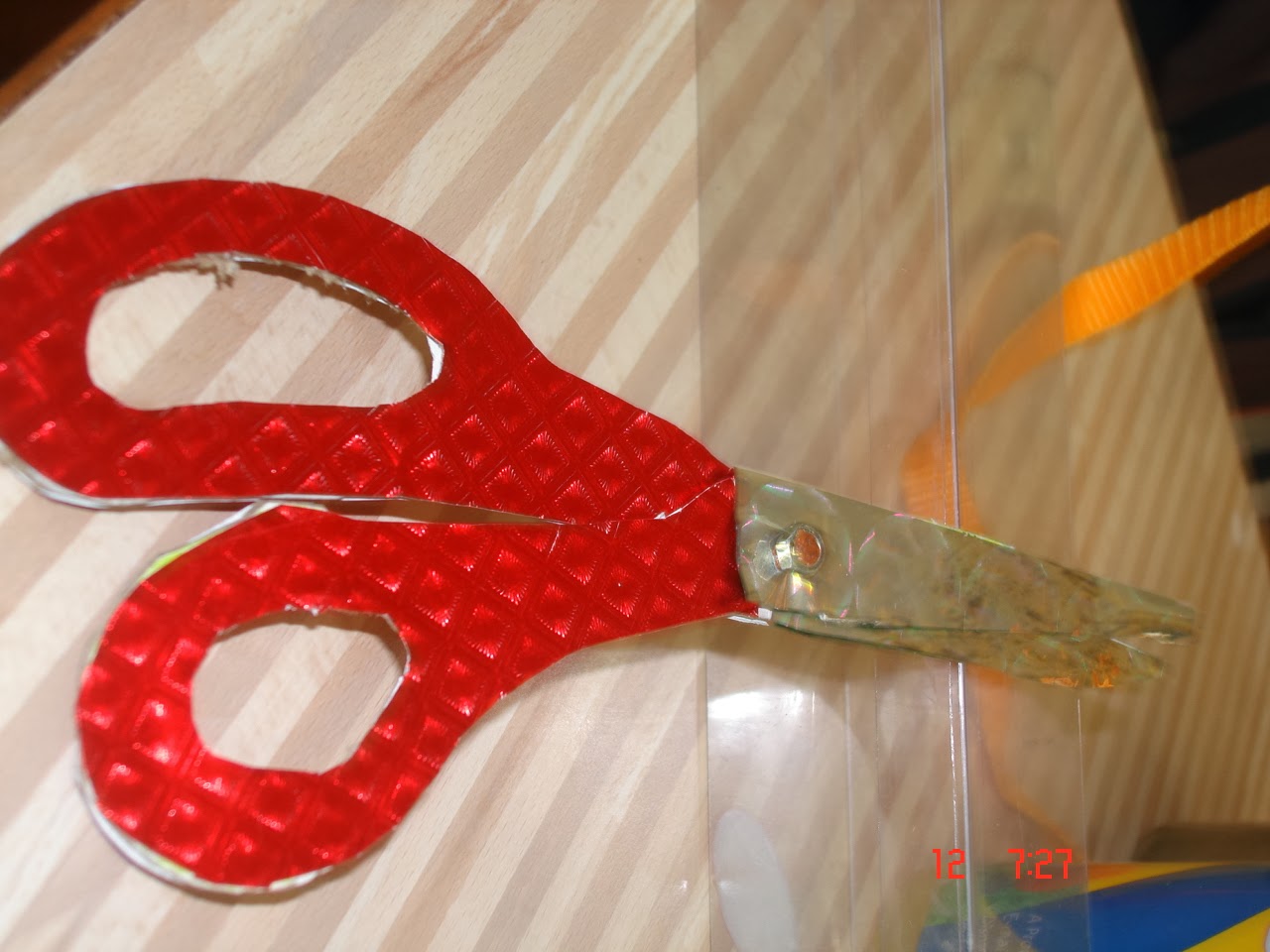
I had once helped my daughter with a project on simple machine and we made a pair of scissors. By the time we could complete it, she was too tired and went off to sleep. I stayed up to complete it as she had to submit it the next day. 

The next day when she returned from school I asked her if her project did well. She told me this: “Amma, your project did well. I cannot claim any credit for it. I told my teacher that I left you alone to complete it and I am not feeling good about it.”  She amazed me with her bold honesty!


A couple of years later it was my son’s turn to submit a project and he needed help. I helped him with the model. He sat up with me till it was done. He decided what he wanted to make and every small detail had to be in place. The model was chosen to be part of an annual exhibition conducted by the school. My son’s teacher wanted him to speak about the transistor that he made. Instead of speaking about it himself, he wrote out a few lines and asked the teacher to make someone else who could speak well do it. I felt a disappointed, but he was very clear. “I am not good at speaking, Amma. I think the girl who has been chosen will do it better”, he told me. I was not sure if he was trying to console me, when it should have been the other way around!

I guess, I never consoled my children by saying something that would give them a false sense of security. I thought it was better to let them face reality and understand their own strengths and weaknesses. 


When I look back I recount how these simple moments bring immense joy and satisfaction every time I think about them, I realised that it is the time that you spend with people that may matter more than the time that you spend for them.


Contributors